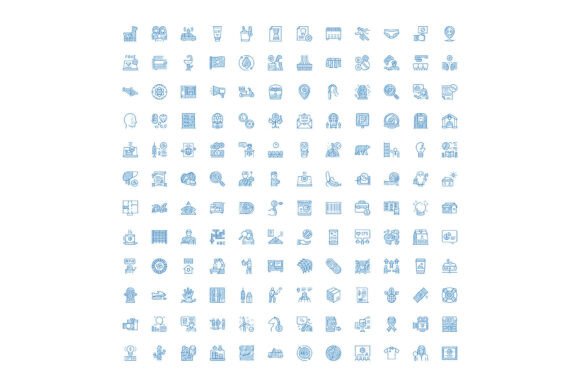
Business, Medical, and Various Concepts: The Doodle-Style Icon System Powering Clarity in a Complex World
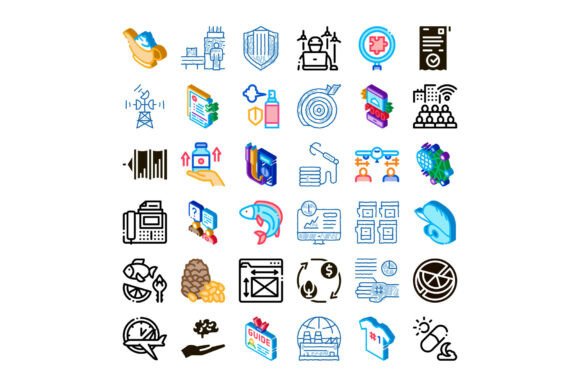
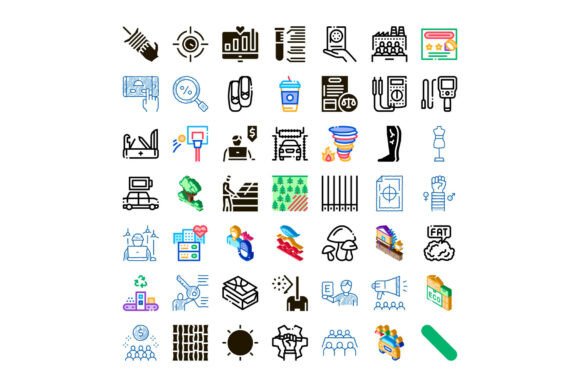
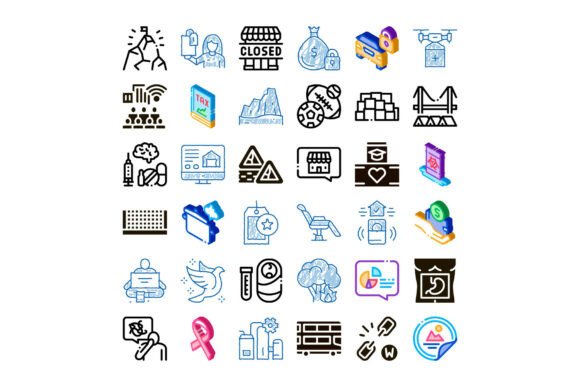
In today’s fast-paced digital landscape—where attention is fragmented, communication must be instantaneous, and cross-disciplinary collaboration is no longer optional—Business, Medical, and Various Concepts has emerged not as a passing design trend, but as a functional necessity. This isn’t just another icon pack. It’s a thoughtfully curated, large collection of diverse outline icons covering business, health, technology, science, and everyday concepts—all rendered in a consistent, hand-drawn doodle style. Designed explicitly for web interfaces and infographics, it bridges precision with approachability, making complex ideas legible, memorable, and human-centered.
What Exactly Is Business, Medical, and Various Concepts?
Business, Medical, and Various Concepts is a unified visual language—a scalable, context-aware icon system that moves beyond generic silos. Unlike traditional icon libraries that treat domains in isolation (e.g., “health icons” or “finance icons”), this collection treats knowledge as inherently interconnected. A single doodle-style icon might represent data governance—a concept equally vital to HIPAA compliance in medical software, regulatory reporting in fintech, and AI ethics frameworks in enterprise tech. Another might visualize patient journey mapping, which resonates across clinical workflow design, SaaS onboarding flows, and even customer experience strategy for telehealth platforms.
The doodle aesthetic is intentional—not decorative, but strategic. Its slight irregularity signals authenticity and accessibility; its open outlines ensure clarity at small sizes and adapt seamlessly to color systems, dark mode, and responsive layouts. Each icon is built with semantic consistency: shared stroke weight, uniform corner radius, balanced negative space, and intuitive visual metaphors grounded in real-world usage—not abstract symbolism.
Why It Fits—and Accelerates—Current Industry Shifts
Three macro-trends converge to make Business, Medical, and Various Concepts uniquely timely:
- Cross-Domain Workflows Are Now Standard: Modern professionals rarely operate within one vertical. A product manager at a health-tech startup navigates FDA guidelines, cloud infrastructure diagrams, and user retention analytics—often in the same sprint. A freelance UX designer building an EHR interface needs to interpret clinical terminology while aligning with Figma’s design system. Icons that speak fluently across these contexts reduce cognitive load and accelerate alignment.
- Trust Through Transparency Is Non-Negotiable: In healthcare, finance, and AI-driven services, users demand clarity—not jargon. A doodle-style icon of a shield with interlocking gears communicates “secure interoperability” more effectively than a dense tooltip. In patient-facing apps, a friendly yet precise illustration of a heartbeat synced with a Wi-Fi symbol conveys remote monitoring without technical gatekeeping. Business, Medical, and Various Concepts supports this shift by prioritizing intelligibility over ornamentation.
- Design Systems Are Evolving Beyond UI Components: Leading organizations no longer treat icons as afterthoughts. They’re treated as first-class semantic assets—integrated into documentation, API references, training modules, and internal wikis. Because this collection spans domains, it enables consistent visual storytelling across engineering dashboards, clinician training decks, investor pitch decks, and public-facing explainer videos—without requiring multiple disjointed icon sets.
Changing Needs, Not Just Changing Tools
It’s not that professionals suddenly need more icons. It’s that their expectations for what icons *do* have fundamentally shifted.
Consider a marketing lead launching a new mental wellness SaaS platform. She doesn’t just need “a brain icon.” She needs an icon that simultaneously signals neuroscience-informed design, behavioral health compliance, and digital engagement metrics—all while feeling warm, credible, and non-clinical. A rigid, photorealistic brain icon feels cold and reductive. A sterile line-art version feels detached. But a carefully crafted doodle-style icon—featuring subtle synaptic connections drawn with gentle curves, integrated with a pulse line and upward-trending graph—delivers layered meaning in under 32 pixels.
Similarly, an entrepreneur building a sustainable supply chain dashboard doesn’t want generic “green leaf” or “truck” icons. She needs icons that reflect circular logistics, carbon accounting, and real-time IoT sensor integration—concepts that live at the intersection of environmental science, enterprise software, and operations management. Business, Medical, and Various Concepts provides precisely those junction-point visuals—designed not for categorization, but for connection.
Practical Observations Across Real-World Use Cases
- Healthcare Interoperability Projects: Teams implementing FHIR-based data exchange use icons from the collection to label API endpoints (e.g., a doodle-style “link chain” overlaid with a stethoscope and database icon) in internal architecture diagrams—making technical documentation instantly scannable for both developers and clinical informaticians.
- Remote Work Enablement Platforms: A collaboration tool serving hybrid teams uses the “focus timer + brain + video call” composite icon to represent “deep work sessions”—a concept blending neuroscience, productivity science, and modern workplace behavior. Users recognize intent immediately, reducing onboarding friction.
- Educational Technology Interfaces: An LMS for continuing medical education employs consistent doodle-style icons for “evidence rating,” “clinical guideline update,” and “case-based learning”—ensuring visual continuity across content types while signaling rigor and relevance to practicing clinicians.
- Sustainability Reporting Dashboards: ESG analysts use icons that merge scientific notation (e.g., CO₂ molecule) with business symbols (e.g., balance sheet, globe network) to visualize Scope 3 emissions tracking—transforming abstract regulatory requirements into intuitive, actionable visuals.
Connecting to Larger Developments: From Visual Literacy to Systems Thinking
The rise of Business, Medical, and Various Concepts reflects a broader maturation in how we understand information design. It’s part of a quiet but powerful movement toward systems literacy—the ability to perceive, map, and communicate relationships across disciplines. This isn’t about dumbing down complexity. It’s about honoring complexity while refusing to obscure it behind inaccessible visuals or domain-specific gatekeeping.
That’s why the doodle style matters so much. It rejects the false dichotomy between “serious” and “friendly.” A well-drawn doodle icon can carry regulatory weight (think: HIPAA-compliant data flow) and emotional resonance (think: empathetic caregiver support) in the same stroke. It mirrors how experts actually think: not in isolated categories, but in overlapping networks of cause, constraint, and opportunity.
This aligns with evidence-based trends in cognitive science: research shows that lightly stylized, schematic illustrations improve recall and comprehension over photorealistic or overly abstract alternatives—especially when conveying procedural, relational, or conceptual information. And because the collection is built for the web first, it supports progressive enhancement: SVG-based, accessible via ARIA labels, themable via CSS variables, and optimized for Core Web Vitals.
Looking Ahead—Without Speculation
What comes next isn’t about adding more icons. It’s about deepening contextual intelligence—embedding metadata that helps designers and developers select the *right* icon for the *right audience*, at the *right moment*. Imagine an icon library where selecting “clinical trial phase” surfaces not just the icon, but guidance on regulatory context (FDA vs. EMA), common adjacent concepts (informed consent, IRB approval), and usage patterns across patient portals versus investigator dashboards.
That future isn’t speculative—it’s already being prototyped by teams integrating Business, Medical, and Various Concepts into design system documentation, automated accessibility linters, and AI-assisted content authoring tools. What began as a visual resource is becoming infrastructure for clearer thinking, more inclusive communication, and more resilient cross-domain collaboration.
For professionals, creators, entrepreneurs, marketers, freelancers, and enthusiasts alike, adopting Business, Medical, and Various Concepts isn’t about keeping up with design fashion. It’s about equipping yourself with a tool that meets the world as it actually is: interconnected, multidimensional, and urgently in need of clarity—not simplification.
When your next project demands that a single visual convey trust, precision, and humanity—whether you’re mapping a genomic data pipeline, designing a fintech compliance workflow, or explaining quantum computing basics to high school students—you’ll reach not for the most polished icon, but for the most meaningfully connected one. That’s the quiet power of Business, Medical, and Various Concepts.