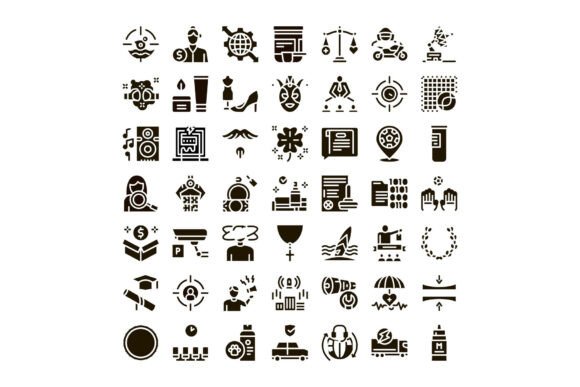
Business, Technology, and Lifestyle Univ: A Practical Evaluation for Learners and Designers
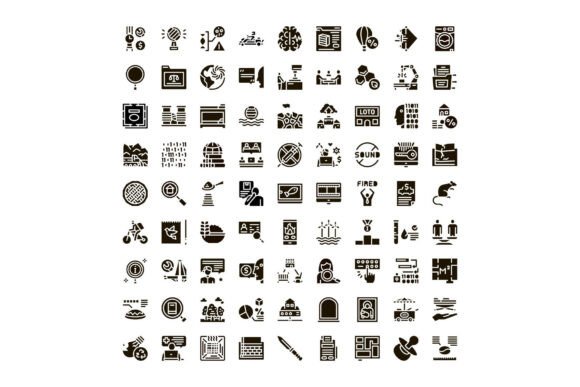
Business, Technology, and Lifestyle Univ is not a traditional university or degree-granting institution. Rather, it refers to a curated conceptual framework—and often a digital resource collection—designed to unify foundational knowledge and visual language across three interconnected domains: business operations and strategy, technology systems and digital literacy, and everyday lifestyle practices including health, education, and leisure. It commonly manifests as a structured library of flat black and white glyph icons, each representing a discrete concept—such as “data analytics,” “mindfulness,” “online collaboration,” or “financial literacy”—intended for use in infographics, dashboards, educational materials, and responsive web interfaces.
This framework supports interdisciplinary thinking by treating business, technology, and lifestyle not as silos but as overlapping systems. For example, a single icon set might include glyphs for “remote work,” “digital wellness,” and “project budgeting,” acknowledging how these ideas converge in modern professional life. Its value lies less in formal accreditation and more in functional coherence—offering clarity, consistency, and scalability for communicators, educators, product teams, and content strategists.
Why People Explore Business, Technology, and Lifestyle Univ
Individuals typically seek out this framework for one or more practical reasons. Educators building modular curricula may use it to ensure terminology and visual metaphors remain consistent across subjects. UX designers and developers often turn to its icon collections when creating dashboards that serve diverse user groups—from HR managers tracking team well-being to public health coordinators visualizing community engagement metrics. Instructional designers evaluating resources for blended learning environments appreciate how the glyph sets map abstract concepts (e.g., “critical thinking” or “cloud infrastructure”) to instantly recognizable, accessible symbols.
Others engage with Business, Technology, and Lifestyle Univ as part of broader efforts to standardize internal communication. Organizations adopting cross-functional agile teams, for instance, may adopt its vocabulary to reduce ambiguity between departments—aligning marketing, IT, and operations around shared visual anchors rather than discipline-specific jargon.
Benefits and Realistic Expectations
The primary benefit is efficiency in visual and conceptual alignment. Because the glyph icons are intentionally flat, monochrome, and scalable, they integrate cleanly into responsive layouts without requiring custom illustration work. Their semantic grouping—organized by domain yet designed for interoperability—supports rapid prototyping and reduces cognitive load for end users navigating complex information.
However, expectations must be grounded. Business, Technology, and Lifestyle Univ does not replace subject-matter expertise. It offers no certifications, no assessments, and no pedagogical scaffolding. Its icons are descriptive, not diagnostic; they illustrate ideas but do not teach them. Users still need domain knowledge to select appropriate glyphs and apply them meaningfully. Also, while the black-and-white format ensures accessibility in high-contrast contexts, it provides no built-in color coding for urgency, hierarchy, or status—meaning additional design decisions are required for functional implementation.
Key Considerations Before Adoption
Before integrating Business, Technology, and Lifestyle Univ into a project, consider three factors: scope, audience, and maintenance. First, assess whether your use case demands broad conceptual coverage or deep specialization. The framework excels at surface-level clarity—for onboarding materials, overview infographics, or navigation menus—but may lack nuance for highly technical documentation (e.g., API reference guides or clinical workflow diagrams).
Second, evaluate audience familiarity. While glyph-based communication improves scannability, some concepts—particularly those bridging domains, like “ethical AI governance” or “preventive financial planning”—require supporting text regardless of icon quality. Relying solely on visuals risks misinterpretation, especially across cultural or linguistic boundaries.
Third, plan for long-term consistency. If your team adopts this framework, document usage guidelines: which icons map to which definitions, how variants (e.g., outline vs. filled) signal different meanings, and whether third-party extensions are permitted. Without governance, even well-designed icon systems can fragment over time.
When Business, Technology, and Lifestyle Univ Is a Strong Fit
This framework works best in scenarios where clarity, speed, and cross-domain relevance matter more than depth or customization. Examples include:
- Educational institutions developing interdisciplinary first-year experience modules;
- Government agencies designing citizen-facing portals that cover employment services, digital ID, and mental health resources;
- SaaS platforms building admin dashboards used by non-technical stakeholders across finance, HR, and operations;
- Nonprofits creating annual reports that translate program impact across economic, technological, and social dimensions.
In each case, the unifying logic of Business, Technology, and Lifestyle Univ helps avoid disjointed visual languages—ensuring that a “learning” icon in an education section visually resonates with a “skill development” icon in a workforce report.
When Alternatives May Be More Appropriate
Consider alternatives if your goals emphasize specificity, regulatory compliance, or aesthetic differentiation. Discipline-specific icon libraries—such as those from medical illustration standards (e.g., SNOMED CT-aligned sets) or enterprise architecture frameworks (e.g., ArchiMate)—offer greater precision for technical audiences. Similarly, custom iconography may be warranted for brands prioritizing distinct visual identity or needing icons that reflect local context, such as region-specific transportation or housing symbols.
Also, if your project centers on data storytelling with dynamic variables—like real-time KPIs or interactive filters—static glyph sets may require supplementation with animated or contextual icons. In those cases, scalable vector graphics (SVG) with embedded metadata or JavaScript-driven rendering may offer more flexibility than a fixed collection.
Making a Practical Decision
To determine whether Business, Technology, and Lifestyle Univ aligns with your needs, ask three questions:
- Do I need a common visual language across multiple domains? If yes, its cross-sector structure is a key advantage.
- Is conceptual accuracy more important than stylistic uniqueness? If consistency and clarity outweigh brand differentiation, its neutral, scalable design supports that priority.
- Can I commit to defining and documenting usage? Without internal guidelines, even the most coherent system loses effectiveness over time.
If two or more answers are “yes,” the framework is likely worth piloting. Start small: apply a subset of icons to one recurring template—such as a weekly team sync slide or a service directory page—and gather feedback on recognition, interpretation, and usability. Measure whether it reduces explanation time or improves navigation efficiency before scaling.
Ultimately, Business, Technology, and Lifestyle Univ serves as a bridge—not a destination. Its strength lies in enabling clearer connections between ideas that too often remain isolated. For learners mapping relationships across fields, designers streamlining complex interfaces, and organizations seeking cohesive communication, it offers a pragmatic starting point. But like any tool, its usefulness depends not on what it is, but on how deliberately and consistently it’s applied.